

By Blaise Patrick Tracy
As you read the headline, you might have thought – wow, Novitas, late to the party much? Juneteenth was last week.
Waiting one week to post this article was purposeful. Why? To spotlight the extremely rapid pace at which news travels in today’s world. And to identify how brutal each minute becomes as we wait for the messaging we wish to hear.
One week is old news. It feels like a lifetime. Now imagine waiting two-and-a-half years for breaking news to be shared with us. Thirty months for information that would literally change lives – and may well save lives.
Two and a half years is the length of time it took for some of America’s slaves to hear the news of their freedom. Today, it literally would have taken two-and-a-half seconds.
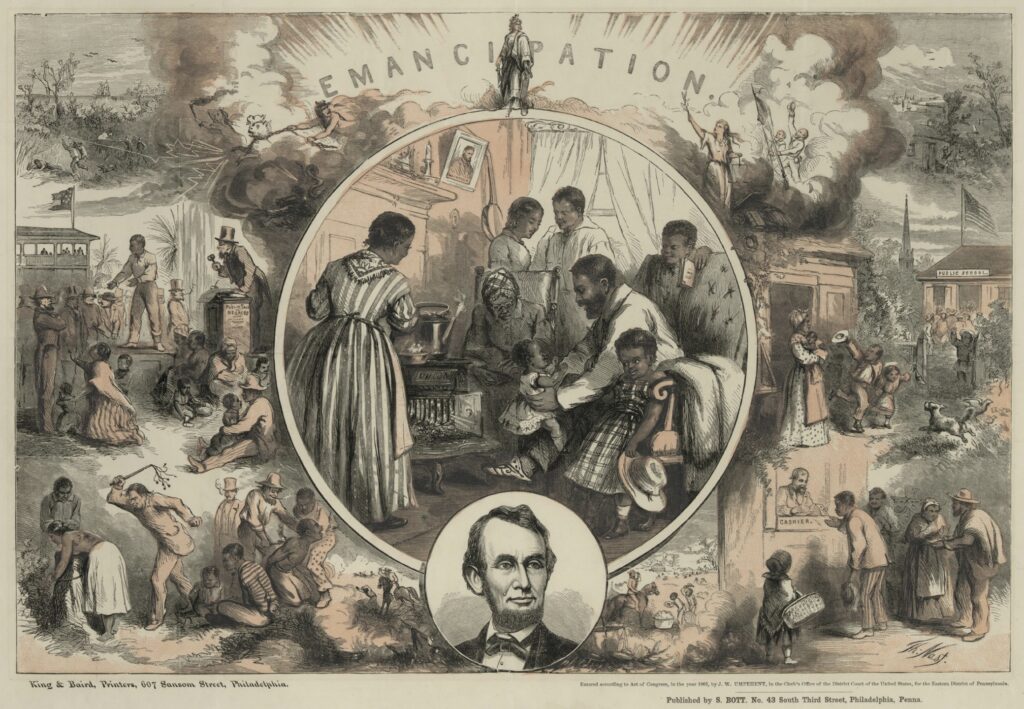
Juneteenth (short for “June Nineteenth”) marks the day, two-and-a-half years after President Abraham Lincoln’s issuing of the Emancipation Proclamation, when federal troops arrived in Galveston, Texas in 1865 to take control of the state – and when U.S. General Gordon Granger stood on Texas soil and read General Orders No. 3: “The people of Texas are informed that, in accordance with a proclamation from the Executive of the United States, all slaves are free.”
The Union’s victory in America’s Civil War which eventually led to the act of abolishing slavery, was a monumental moment in America’s history in championing the ideals as stated in the Declaration of Independence, “All Men are Created Equal.”
We have to ask, why did it take so long to get the news to Texas or anywhere for that matter? Well, the distribution of information was starkly different than it is today. Here is a taste of reasons why it may have taken months and years for news to travel to all corners of the United States during the days of Lincoln’s presidency.
- Face-to-Face
- The primary means of communication was conveyed through personal contact; literally face-to-face.
- There was no radio or television; telephones were only available to a small, privileged group.
- Most of the population led isolated lives in which contact was restricted to family and close friends.
- Snail Mail
- Letters were costly to mail and slow to be delivered.
- Within the northern cities during the civil war, came the introduction of mail delivery to people’s doors, however outside of cities this concept was still decades away.
- The Penny Paper
- Newspapers were read daily in only about 10 percent of American families.1
- Some small towns had newspapers, primarily published weekly and focused only on local news.
- Nearly 80 percent of the African American population and more than 10 percent of the white population was illiterate1, and these people had little knowledge of the world outside their daily routines.
- News Timing
- Only about three-fourths of the reports in a daily newspaper were of events that had occurred in the past week, and 8 percent of the news coverage was of stories over a month old.1
- Telegraph
- The telegraph was the electronic transmission of messages in a coding system that could be decoded by a receiving machine operator hundreds or even thousands of miles away, but at this time, access was limited.
- It was expensive and time consuming. Since it ran through cable, wire had to be laid, and then news stories were communicated in abbreviated form by operators who were likely to be indifferent to content.
- Narrow Circles
- City life was concentrated in small areas because of the difficulty of getting around the city. The result was that people had close contact with their neighbors and little knowledge of the area outside their direct experience.
- In the country, it was even tougher to disseminate news. Travel was on horseback or in a horse-drawn carriage during this era. A ten-mile journey to a town center for news and conversation about current events might take four unpleasant hours, round-trip.
Thankfully, 160 years later, we’ve come a long way to better our communications. The communication tools we have at our fingertips are truly remarkable. News, photos, and data can be shared immediately and across the entire world with the flick of a thumb. AI is here, as is the continued advancement of social platforms, tech, robotics, and the group of extended reality experiences, to name a few.
Today, ethical communication and public relations carry astounding responsibilities. If done right, it can be life changing. If done poorly, it can be downright devastating.
Responsible and effective public relations requires a strategy for managing our brand’s reputation and communications. It enables our business to connect with our audience, position our message, and regulate challenges. The results of implementing a successful strategy will build credibility, strengthen media relationships, deliver timely information, and help us respond quickly to crises.
The sphere of public relations is ever-changing, and the content is often of a sensitive nature, therefore it requires a dedicated team to meet the demands of both strategic and urgent communications deliverables.
Fortunately, Novitas Communications is positioned to serve our clients with full service public relations capabilities – delivering results in content creation, messaging, reputation, crisis management, and a wide variety of communications needs.
We recommend strategies with action plans so you and your business can excel as thought leaders during the good times and manage decisively through the difficult times.
We’re headquartered in Colorado and manage clients anywhere in the United States. If you know a business in need of our services, we’re here anytime to solve today’s communications challenges.